The program will focus on job training, education, reform of parole procedures and fatherhood classes. More than a dozen city agencies will be involved. As part of the effort, Bloomberg issued an executive order barring city agencies from placing undue barriers before job applicants with criminal convictions unrelated to the job.I am a co-presenter in a heavily attended workshop with Stephan Haimowitz, an attorney and scholar from the Burton Blatt Institute that addresses barriers faced by those with criminal backgrounds as they attempt to enter the job market. By far, the most frequent question we receive in this workshop is how to help clients get past the "have you ever been convicted of a crime" question on almost every job application in the country.
That Bloomberg is able to bar city agencies from "placing undue barriers" in front of applicants is to be loudly and vigorously applauded. Whether it actually works remains to be seen, but there is an increasing effort at the national level to address this almost insurmountable barrier for many. Efforts like the Federal Bond program, the Second Chance Act, and an increased level of awareness by employers and the community concerning the importance of providing real employment opportunities to those of us convicted of felonies is by far the best way to lower recidivism rates and help cultivate these men and women into productive, law abiding members of our community.
This is not to underestimate the potential risks involved in hiring felons but as I state in our workshop, "if you release an individual from prison and that individual finds that there is no one who is willing to risk hiring him/her, you've created conditions of desperation for that person. A desperate person may do things to survive they ordinarily would not do. Turning to drugs, theft and other crimes as a means of survival and coping is not only the logical outcome of restricting an individual's ability to earn a living and survive, recidivism rates seem to strongly bear it out."
To be sure, there are some people who suffer from "criminogenic" needs and the challenges increased. But we cannot realistically expect those who've been convicted of a crime to succeed if the stigma of a criminal background follows them forever and dramatically impacts their ability to obtain even the most low level jobs in our society.
I am a firm believer that education mitigates the criminal record, and the more education one has, the better. Additionally, the more time one has between their conviction and the date of their application is also a major factor. Unfortunately, some companies have strict "no felon" policies that keep otherwise honest, rehabilitated and conscientious men and women from ever being able to work for them.
The United States now incarcerates more people each year than any other country on earth. As more and more of our people find themselves with criminal records, especially for drug crimes, we are reaching a tipping point and we as a society are going to have to make some adjustments or risk alienating and subsequently establishing a permanent class of "desperate" people. Efforts like Soros and Bloomberg's here are a very positive step in the right direction.
Let's hope it's wildly successful.....
Young Men's Initiative, Program For Young Minorities, Draws Praise, Questions
Karen Zraick 08/ 4/11 09:23 PM ET 
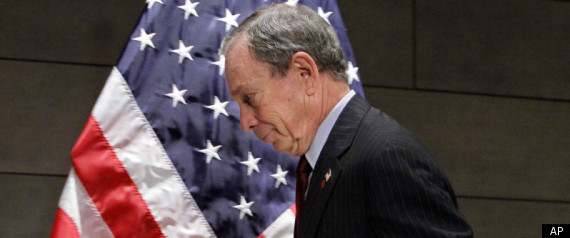
NEW YORK — Mayor Michael Bloomberg's announcement of a $127 million project to help young black and Latino men was met with praise, but also some criticism over its funding on Thursday.
The Young Men's Initiative targets about 315,000 black and Latino men between the ages of 16 and 24, a demographic that has seen stubbornly high rates of unemployment, incarceration and poverty. Half of the three-year project will be financed by the foundations of Bloomberg and his fellow billionaire George Soros, while $67.5 million will come from the city budget. The mayor's office called the program the country's "boldest and most comprehensive effort" to tackle the problem.
"When we look at poverty rates, graduation rates, crime rates and employment rates, one thing stands out: Blacks and Latinos are not fully sharing in the promise of American freedom and far too many are trapped in circumstances that are difficult to escape," Bloomberg said as he announced the program at a breakfast on Thursday.
The program will focus on job training, education, reform of parole procedures and fatherhood classes. More than a dozen city agencies will be involved. As part of the effort, Bloomberg issued an executive order barring city agencies from placing undue barriers before job applicants with criminal convictions unrelated to the job.
"A job is the best anti-poverty and anti-crime program ever devised anywhere in the world," Bloomberg said.
The initiative was applauded by advocates for ex-prisoners who noted that, statewide, New York has moved toward reducing its prison population.
"This is a contribution to the health of the city in terms of what matters most, which is salvaging young lives," said JoAnne Page, president of The Fortune Society, a nonprofit that helps recently released prisoners. Her group works with about 4,000 ex-prisoners a year, the vast majority of whom are black and Latino men, she said.
A criminal conviction can be like a scarlet letter for job applicants, Page said. The city will now ask applicants about a criminal history later in the application process to keep them in the running for jobs, she said.
Chris Watler, project director at the nonprofit Harlem Community Justice Center, said giving a young man a job has a ripple effect, helping families and ultimately stabilizing communities.
But others questioned the strategy of providing millions for job training without a guarantee that there's a job waiting.
"Training people for jobs that don't exist isn't always the most effective strategy," said Joel Berg, executive director of the New York City Coalition Against Hunger.
Berg commended Bloomberg for funding the program, but said he wished it did more to encourage corporate leaders to create living-wage jobs.
Others said the announcement raised questions about Bloomberg's overlapping roles as politician and philanthropist.
"You have private money which is pushing where the public money will be spent," said Susan Lerner of the watchdog group Common Cause New York. "Where's the evaluation process? Where's the public input?"
City Council member Charles Barron, a frequent critic of the mayor, said the program looked like a way for Bloomberg to burnish his legacy as his time in office winds down. Bloomberg's approval ratings have lagged in his third term, particularly after criticism of the city's response to last winter's blizzard.
"I think it's hypocritical and a Band-Aid," Barron said, criticizing the mayor for cutting funds for youth programs from the city budget.
"I think this was more for the mayor than for the youth."
But others noted that the mayor is not expected to run for office again, so he wouldn't stand to gain politically.
"This is what makes him a unique mayor and civic-minded philanthropist, that he does care deeply and uses his private money for public good," said Dick Dadey, executive director of the Citizens Union.


