9.30.2011

"This is the time to move beyond sweetheart deals and open up our federal housing policy to rigorous public debate and scrutiny. "

Read this, then call your Congressperson. PLEASE.

At the Crossroads: Time to Decide Whether Housing Is a Human Right or Commodity?

Posted: 9/28/11 10:47 PM ET

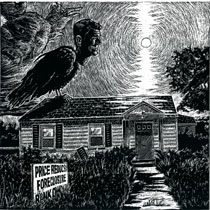
2011-09-29-Ronreturns.jpg On August 10, 2011, the Federal Housing Financing Administration, Treasury, and Department of Housing and Urban Development issued a joint Request For Information (RFI) "seeking input on new options for selling [250,000] single-family real estate owned (REO) properties held by Fannie Mae and Freddie Mac, and the Federal Housing Administration."
REO properties are casualties of the real estate bubble and already failed to sell at foreclosure auctions. The federal government owns half of all REO properties in the country as a result of taking over Fannie Mae and Freddie Mac. REOs are concentrated in poor neighborhoods that have some of the nation's highest foreclosure and unemployment rates.
What we decide to do with these public assets represents a choice with huge ramifications: do we use them to address the needs of the communities hardest hit by the "Great Recession" or do we bulk-sell them at severely discounted prices to private investors who are looking to convert them into lucrative rentals?
The stated goal of the RFI is to enhance "market outcomes" and "reduce taxpayer costs, stabilize neighborhoods, and respond appropriately to market demands." The RFI specifically solicited ideas from "market participants" on how to pool REOs in specific geographic areas to "maximize economic value." This is policy talk for making the housing market profitable again for banking, finance, and real estate interests.
The likelihood that this process will benefit financial institutions that can bring billions of dollars to each transaction - some of the very same speculators responsible for the mess we're in to begin with - is high unless communities across the country take a stand and demand that the federal government use these homes for the public good rather than private gain.
In RealMoney, Roger Arnold explains why the RFI process is problematic:
"In reality, the RFI is a way for the members of Congress to find out if they can get away with bulk-selling these homes to private companies without incurring the wrath of their constituents, taxpayers and former owners of the properties...
The way to keep taxpayers from pushing back is to structure the RFI so that the real intention, the bulk sales, is masked by feel-good goals, such as stabilizing neighborhoods and increasing the supply of rental properties."
This is the time to move beyond sweetheart deals and open up our federal housing policy to rigorous public debate and scrutiny. We must rethink the market ideology that has dominated policy since the 1970s, valuing profit over people and leaving millions of families and individuals homeless or on the brink of losing their homes. If we don't act now, we run the very real risk of condoning the huge transfer of public wealth to the private sector and worsening inequality.
To this end, WRAP supports the RFI applications submitted by our allies at the Campaign to Restore National Housing Rights and Causa Justa::Just Cause (click HERE to read CRNHR RFI and HERE to read CJ::JC RFI). These applications raise important recommendations for keeping people in their homes and connecting empty REOs to real jobs and housing programs for communities suffering most from unemployment, foreclosures, displacement, severe rent burdens, and homelessness.
It is time we put an end to the federal government selling off precious publicly owned housing stock and reinvest in people and housing as a human right, not a commodity!
(Image Credit: Jos Sances)
 
Follow Paul Boden on Twitter: www.twitter.com/@withouthousing

9.26.2011

Mark Horvath Bringing Another Megaphone To Those Experiencing Homelessness

Last Friday, I think we made internet/Facebook history over at WeAreVisible.com.

A little background before I explain.  We Are Visible was/is the brainchild of Mark Horvath, whose name has become synonymous with the voices of those experiencing homelessness.  Mark has been bringing video interviews with people from the street into mainstream discussions for a number of years now, and recently completed a cross country Canadian journey that brought the voices of our homeless friends in the Great Cold North into mainstream.

I met Mark online a few years ago and enjoyed a face to face meeting w him back in August, 2010, I think, when he came to Nashville to hang with the good peeps languishing in homelessness in our fair city. I'd always admired the man's work and his dedication to continue in the face of adversity so many of us who work in homeless services deal with as we try to bring attention to a situation that doesn't invoke much sympathy or emotion from the larger community.  This is primarily a response generated from gross ignorance and voluminous misinformation about the causes and conditions associated with homelessness. Mark's work has played a significant role in helping to raise awareness and bring members of the larger community together with those homeless residents who, until recently, were unheard, ignored, told to move along, and persecuted in the process just about every step of the way.

Mark created We Are Visible as a place for those who were still trapped on the streets to be able to reach out and connect with others, find resources, learn how to use technology to better their current (and future) situation, and be present and active in their community.  For many of us, this "present and active" is so common as to be taken for granted.  I suspect most of us don't give much thought to the privilege of "logging on" and becoming instantly connected with the rest of our world.  For those on the street however, just getting to a location with public access to a computer on the web is both a a major accomplishment.

The We Are Visible site is managed by Carey Fuller, who is currently experiencing homelessness and is struggling to extricate herself from the street while running the site in the process.  No easy task, let me tell you, and that Carey is able to do much beyond the daily fight for food, clothing and shelter that occupies 99 percent of the homeless individual's 24 hour cycle is nothing short of miraculous. Yet she does, and it was Carey's effort, collaboration and ability to network that created homeless internet history on Friday.

And that history was...members of the Homeless Community that is We Are Visible invited an Outreach Specialist and national trainer on outreach and engagement techniques to come hang out on the We are Visible Facebook page and have an online question and answer period. I don't think this has ever been done before, and I suspect we'll be doing it again as well soon.  I hope too that this is merely the start of those experiencing homelessness to bring folks who work for them into their community to chat, ask questions, provide guidance and offer suggestions, and to put us on the hotseat when we aren't meeting the needs of those we're supposed to be serving. 

It's a radical shift of the balance of power and it's a terrific way of providing peer advice, especially to those of us who have done the book work, know the theories, yet have little "lived" experience with the scourge that is homelessness.  There is no better voice in determining what courses of action should be taken, what resources need to be made available, what approaches work - and don't work, too.

Please, if you get a chance, stop by Mark's @hardlynormal twitter site and drop him a "Thanks." And then surf on over to the We Are Visible site and say hi to thousands of folks just like you, with the only difference being that you may have a place to lay your head each night while they do not.  Like their Facebook page if you're so inclined, but most of all, give them the respect of listening to their voices.  It's most likely a very rare occurrence indeed that someone hears what they're saying....


9.20.2011

When the Tea Party Republicans stand against food stamps, unemployment insurance, Medicaid, and other programs for those displaced by the Great Recession, through actions both direct and indirect, they are in fact killing people.

Seems like the wingnuts are getting nuttier by the moment...


How the Modern GOP Is Like a Death Cult

By Chauncey DeVega, AlterNet
Posted on September 18, 2011, Printed on September 20, 2011
http://www.alternet.org/story/152452/how_the_modern_gop_is_like_a_death_cult

They cheer at the thought of an uninsured person dying. They cheer at the thought of state-sponsored murder. In all, the 2012 Tea Party Republican debates have revealed that they are a death cult.

Some observers were shocked and surprised by the behavior of the Tea Party Republicans and their supporters during the primary debates. Others have complained that CNN's surrender of air-time to the Tea Party is a compromise of journalistic ethics. I would suggest to the latter that CNN performed a public service by providing a window into the Tea Party Republican soul. And to the former, there should be no surprise here: in the age of Obama, contemporary conservatism has surrendered to a virulent, dystopian and pathologically hyper-individualist state of nature, "all against many," type of populist right-wing ideology.

From the proclamations of Republican officials that the unemployed are poor because they lack spirit and drive, an Orwellian political vocabulary of "job creators" and "non-productive citizens," opines that poor people in America have it relatively easy (thus austerity politics ought not to be that painful), and a belief that the social safety net (basic programs such as Social Security and unemployment insurance) has destroyed the United States and made people "lazy,"contemporary conservatism has fully embraced a politics that are utterly and totally bereft of human empathy.

My claim that the Republican Party is a death cult is a strong one that demands explication and transparency. "Cult" is a signal to the narrow thinking and state of epistemic closure that has come to dominate conservative, right-wing political thought. As I have suggested elsewhere, populist conservatism is also colored by an unflappable instinct that faith should be the guiding principle in political decision making--what is a belief in the unprovable--that fuels a theocratic vision of public policy under the umbrella of Christian Nationalism and Dominionism. Because the Tea Party GOP's foot soldiers, as well as the Bachmanns, Palins, Perrys, and Cains believe a thing to be true--often in the face of all available evidence and data on the subject--it must in turn be as they imagine. Reality must always bend to their will: the anti-intellectualism of populist conservatism demands that the facts are to be damned; empirical reality is to be discounted as some type of plot by the mainstream media, "liberals," or "elites."

The cultish behavior of the Republican Party is manifest by a rigid orthodoxy of ideology. Those who do not pray at the mantle (and in the approved position) are labeled heretics. Any conservative who challenges the far-right agenda or believes in pragmatism and normal politics, i.e. working with President Obama and the Democrats in the interest of the common good, is labeled a traitor or a heretic.
Likewise, those who dare to suggest that taxes should be increased on the wealthiest Americans to increase revenue, or that the government has a role to play in providing some relief during the worst economy since the Great Depression, are cast out of the tribe for daring to utter words and hold ideas that are verboten to the high acolyte "true believers" in the Republican Party.
The "death" in my use of the phrase "death cult" is both literal and symbolic. The symbolic aspect works in a number of ways. First, it is present in the Right's support for rampant militarism abroad and how the Right has skillfully used the "national security" narrative, the mass public's fear of terrorism, and an almost pornographic appeal to the tragedy of 9/11 to seduce low-information conservative voters and Independents into supporting their political agenda.

Second, "compassionate" conservatives (a label that is the very definition of double-speak) are against extending basic income supports and humanitarian assistance to the neediest Americans. As recent data suggests, poverty leads to death and a diminished lifespan. When the Tea Party Republicans stand against food stamps, unemployment insurance, Medicaid, and other programs for those displaced by the Great Recession, through actions both direct and indirect, they are in fact killing people.
The literal embrace of death by the Tea Party Republicans works as follows. When supporters of the Republican Party howl that they "want to take their America back" they are signaling to an America that is dead and gone. Their halcyon Leave it to Beaver dreams of a country where whiteness was unchallenged and central in all things, and where "those people" stayed out of the way (or were either invisible or fully subservient to the whims of white folks), is gone.

With immigration, the "browning of America," and a black president, the white racial frame is upset, the cognitive map of the Tea Party Republican faithful is forced to deal with the unthinkable, that in some impossible way they could be marginalized in "their own" country. Of course, this is untrue. But the fear is real and palpable. The death of American Empire is a close cousin to the death of the Tea Party Republicans' memory of a country that never really was.

America is facing unprecedented challenges from China. We rank increasingly low on educational attainment, class mobility, health care, and other measures. Where we are exceptional, in our debt and military spending on a bloated imperial project, the United States looks more like the British at the turn of the 20th century, a country in decline and struggling to manage how to fall with grace as opposed to a hellish crash.
The Tea Party base is also quite literally dying. Although the fancy social science phrase is "generational replacement," the reality is that the Tea Party GOP is comprised of white Americans who are much older than the general public. As America changes, the political values and beliefs which are a product of a political moment long past will quite likely become less of a force in American politics. Death for the Tea Party Republicans is a fact that lives in the present.

Ultimately, the sum effect of death's role in the political ideology of the Tea Party Republicans is akin to that of the five stages of grief. They are stuck in the anger stage of the process: the Tea Party has not yet moved on to the step that is "acceptance." Tea Party Republicans are brought to a frothing rage and madness by fictions such as Birtherism and a belief that whites are oppressed because a black man is president. They rage about "class warfare" but look at unions, the working class, and the poor as the causes of America's economic calamity as opposed to the kleptocrats and the rich who have benefited from one of the most maldistributive economies in the Western world. In their eyes, government is the problem and never the solution. The State is to be torn down by secession and revolt.

The Tea Party GOP is angry about everything, but they do not know how to transform that energy into productive behavior and good governance. There is an additional metaphor at work in my suggestion that the Tea Party GOP is a death cult. Despite claims to the contrary, the Tea Party is not a grassroots movement. They are funded by corporate interests such as the Koch brothers. These conservative corporate elites who drive the faux populism of the New Right are acting as the hand on the Ouija board, a group of necromancers who play with death as channeled through the Republican Tea Party. In their Thanatos game, the corporate Right has unleashed a force that the mainstream of the Republican Party is not able to fully controlThe Tea Party is extremely unpopular and their lack of acceptance by the American people is damaging the future electoral fortunes of the Republican Party as a whole.

Or stated differently, the Tea Party is the poltergeist of American politics. It is angry and destructive. The Tea Party poltergeist was summoned up by a crisis of faith, a decline in America's standing in the world, and a system shock brought about by the combination of the Great Recession, failed misadventures in Iraq and Afghanistan, and poor political leadership at home. Some have suggested that American politics is sick, and that it is suffering from an autoimmune disease: the Republican Party's abandonment of normal politics is a symptom of this illness.

I do my best to avoid eliminationist rhetoric. Unlike populist conservatives, I try not to call my political foes a "sickness" or a "virus" to be destroyed. Nor do I suggest that conservatives are possessed of a mental illness that ought to be cured. However, I do think that Americans in this political moment are witness to a crisis in spirit and an existential malaise. We are a country in pain. We as a people are angst-ridden. The Ayn Randian dream of the Tea Party GOP, the death cult that they are, is not a solution to the challenges America faces in the 21st century.

The goal of Republicans and populist conservatives in the present is a victory at all costs, one that is Pyrrhic and couched in the language of a glorious struggle or a political holy war, right-wing jihad, and free-market austerity crusade. Consequently, an exorcism is the only viable solution to this abhorrent type of abnormal politics by the Tea Party GOP, one brought about by their fixation on the politics of death. The Tea Party Republicans will cheer death, just as they did during the last two debates. And the Tea Party will bring the roof down upon us all as their poltergeist-like politics works to destroy the common good.

The challenge for liberals, progressives, pragmatists, and reasonable conservatives is how to reclaim life, and by doing so America's future, from the jaws of the death cult that is the populist-infused Republican Party.

9.14.2011

U.S. Poverty Rate Highest In Over 50 Years

Talk to any one of us who've been working - or living on - the streets over the past decade and this is some old news indeed.  We've seen and heard atrocious tales of utter destitution, a crumbling of the average person's ability to find and hold employment that pays enough to afford rent and groceries through the month, and the increasing attacks on people in poverty are not just disconcerting, they're frightening.  

That is some depressing information and more discouraging is the increasingly pervasive hopelessness that things will not get better in their lifetime.  Worse, there are still so many people out there who seem to think that it cannot happen to them, that they are somehow immune to abject poverty and that if a person really wants to, he/she can find work and make a go of it.

What those people fail to realize is that life on the knife-edge the working poor stand upon daily can change dramatically at a moment's notice. Because it's next to impossible to "save for a rainy day" when living paycheck to paycheck, there is no cushion in place to help folks subsist until they are able to regain their footing.  All it might take is to have a flat tire at a period in the month when a new tire is not in the budget and that domino could begin collapsing others behind it so quickly that within literally a couple of months, the individual is facing eviction and homelessness.  It really is that simple; I know because I've worked with many who have experienced a similar slide into poverty and homelessness. 

The one thing to keep in mind here, and I've been saying this since I started this blog years ago, is that when people become desperate, all bets are off.  Things one would never consider during times of prosperity suddenly become considerable options....

Poverty Rate Crosses 15%, highest in over 50 years: U.S Census Bureau

Poverty Rate Crosses 15%, highest in more than 50 years: U.S Census Bureau
Household incomes among Americans have fallen sharply, accompanied by a rise in the number of people living below the poverty line to 46.2 million, the highest in over 50 years, according to income and poverty figures released by the U.S Census Bureau yesterday.
The poverty rate is the highest recorded over the 52 years that the Census Bureau has been publishing U.S economic data, while the low median household income level reported yesterday is comparable to levels last seen in 1997.
These figures add more distress to the already disappointing economic figures released by the U.S Department of Commerce and the Labour Department about the decline in consumer spending and high unemployment levels – which are at their highest this year.
The poverty line is defined by the U.S Census Bureau as below an annual income of $22,314 for a family of four, $17,374 for a family of three, $14,218 for couples and $11,130 per year for one person.
The worst hit states are Louisiana and Mississippi, with 21.6% and 22.7% people living below the poverty line, while Connecticut with a below poverty line population of 8.3% is the best off among all the states.

Doubled Up Households

These lower income and higher poverty levels are also reflected in a growing trend of “doubled-up” households, which the report defines as households that include at least one “additional” person who is 18 or older, not enrolled in school, not the house owner and not the spouse or partner of the house owner.
According to yesterday’s Census Board report, the total number of doubled-up households recorded in spring 2007, prior to the recession, was at around 19.7 million. In comparison, by spring 2011 this number had risen by 2.0 million to 21.8 million.
This change is reflective of the 5.9 million young adults, aged 25 – 34 (14.2 percent), living with their parents’ households, as compared to 4.7 million (11.8 percent) that was recorded before the recession.

Obama’s Re-election Campaign

The Census Bureau report comes soon after President Obama’s efforts to try to pass a jobs bill with his proposed package of $447 billion in tax cuts and spending towards reviving job growth and economic recovery.
How this grim economic situation is handled and the way poverty and income numbers progress is likely to have a significant impact on President Obama’s 2012 re-election campaign.
The Jobs plan being proposed by Obama includes a payroll tax holiday for workers and employers, tax credits for employers who hire long-term unemployed workers and an extension of unemployment benefits.
Katharine Abraham, a member of the White House Council of Economic Advisers said in a statement, “It’s a good package. If it is not enacted, there could be people who experience significant problems.”
The job-creation policies being put forth by the president are being set up so as to take effect as soon as Congress passes the bill, paired with tax increases, mostly on the top 2 percent of households that make more than $250,000 a year, starting in 2013.
It is this last part of Obama’s plan however, that is already facing a lot of disagreement from the Republicans, with House majority leader, Eric Cantor, voicing his discontent with a plan that will tax “job creators” and Senate minority leader, Mitch McConnell, saying that the tax proposals were dead on arrival.

9.09.2011

Helping the Poor to Vote: "Registering them to vote is like handing out burglary tools to criminals."

After reading this bizarre piece from Matthew Vadum, who writes this very un-American argument to disenfranchise "the poor"in a blog called the "American Thinker," I perhaps for the very first time considered round-filing my fervent adherence to an old Voltaire quote: "I may not like what you have to say, but I'll defend to the death your right to say it."

Calming down somewhat, I decided Mr. Vadum needed to be exposed as much as possible, because there's another old saying from Sun-tzu that goes, "keep your friends close and your enemies closer."

I know nothing of Mr. Vadum other than what I've read here, but frankly this piece alone is more than enough for me to file him into my "radical people to be terrified of" folder. He goes right in there with other dangerous radicals like Osama Bin Laden and Timothy McVey, adding to the burgeoning list of wingnuts, crazies, and moonbats who are barreling out of the woodwork, the speed of which seems to be in direct proportion to the decline of our economy and our American "empire. "

I wonder whether the irony of writing in a blog called the American Thinker about stripping poor people of their voting rights ever occurred to Mr. Vadum, but given the sheer ignorance of his proposal, I suspect the answer is a resounding "not in a million years."

There's a need to be vigilant against threats to our way of life, no doubt about it.  But we'd better be very aware that some of the most dangerous of those threats aren't coming from foreign countries bent on paying us back for perceived evils we've perpetrated upon them.

They're coming from the person in the house next door....

September 1, 2011

Registering the Poor to Vote is Un-American

By Matthew Vadum
Why are left-wing activist groups so keen on registering the poor to vote?
Because they know the poor can be counted on to vote themselves more benefits by electing redistributionist politicians.  Welfare recipients are particularly open to demagoguery and bribery. 
Registering them to vote is like handing out burglary tools to criminals.  It is profoundly antisocial and un-American to empower the nonproductive segments of the population to destroy the country -- which is precisely why Barack Obama zealously supports registering welfare recipients to vote. 
A decade before the Motor-Voter law that required states to register voters at welfare offices was enacted, NAACP official Joe Madison explained the political economy of voter registration drives.
"When people are standing in line to get cheese and butter or unemployment compensation, you don't have to tell them how to vote," said Madison, now a radio talk show host in Washington, D.C.  "They know how to vote."

9.08.2011

SOAR Makes a Movie Star

The good folks who bring SOAR to the world (okay, to many places in the U.S., anyway) are lurking in the downtown Nashville area this week, working on a docu-drama with a film crew out of Los Angeles to create a very cool infomercial of sorts on the benefits of the SOAR program.

This is meaningful to me for several reasons, not the least of which is that my old boss and dear friend, not to mention colleague Will Connelly happens to be a part of the effort! 

Perhaps most meaningful however, is that the "client" being filmed as the person who is approached and taken through the SOAR process is another dear friend, "Bones," and he is the first person I met while working the streets of Nashville, and was the very first person I successfully used SOAR with to obtain SSDI.

Bones' life today is far different than the life he led living in the downtown park when he and I first began "engaging," as we pompous pro's call it.   Suffering from morbid obesity, diabetes, a horrible skin infection, congestive heart failure, COPD, eye problems, sleep apnea, and several other minor but irritating health issues, Bones could barely get off the park bench he called home.  He used to wheel and deal anything he could get his hands on, from tobacco to bologna, and would send runners up to the dollar store in order to shop for his daily meal, which typcally consisted of a loaf of cheap white bread and a package of nasty chicken hotdogs.

If you've lived homeless or worked in any capacity with people experiencing homelessness, you know that the diet of the typical person on the street is bad to lousy, often through no fault of their own.  Quality food is expensive and it's hard to get in many locations, especially for those without transportation beyond shoe leather.

Since he had no health insurance, Bones frequented the local county hospital ER, and because he couldn't afford the scripts he was given to control his health problems, they continued to worsen.  A vicious and expensive cycle, no doubt.

Suffice it to say, although he was one tough son of a bitch, it was pretty clear to those of us paying attention that if we didn't get this man some housing, some income and some health insurance, he'd be dead inside of a year.

So I took him on as a SOAR client.  Interestingly, getting him approved through SOAR was the easiest part of the treatment protocol we developed to assist him.

The real work began once he was awarded his SSDI.

Common logic suggests that once a person has an income, many other things, such as housing and transportation, begin to fall into place.  While this is true for those who have no public past, it's rarely accurate for those who've spiraled into homelessness through one of the hundreds of routes available.

Bones' challenges ran the gamut; bad credit, eviction notice, criminal record, lack of appropriate documentation, and of course, lack of affordable housing.

It took us a year to get most of the barriers torn down, and frankly, it was only through the kindness and rule-bending of a transitional housing provider that we were able to keep Bones with a roof over his head while we waited to get him into permanent housing.

That was just about 4 years ago now, and today Bones'  has a life full of...well, life! He helps run a community garden that provides produce to a local food bank while saving the city the costs of maintaining the plot of land in the process.  He volunteers - a lot - at his church, spends time helping others who are currently homeless, and he's been a potent local voice on ways in which providers and the city can help those experiencing homelessness in far better ways than they are currently practicing today.

When PRA  contacted me looking for a potential SOAR candidate, there was none better, in my humble opinion, and from the reports I've received so far by those involved with the filming, I was right.

It'll be a real privilege to work with both Bones and Will.  It won't  be genuine street outreach but I know firsthand the incredible benefits the SOAR program can provide and helping in this effort will surely touch the lives of hundreds, perhaps thousands.

But if it helps just one, it'll be worth it, and time spent with the two people who really helped launch me into this career trajectory is a very pleasant plus, indeed.


9.07.2011

Economic Ugliness: "Job growth ground to a halt in August, and the labor market remains in a deep slump"

After spending literally decades both on the street and working with those who continue to languish there, it's clear to me that one of the most overlooked areas necessary to help us end homelessness is employment opportunities for folks on the bricks.

Unfortunately, this is a formidable challenge in even the best of times, due at least in part to the stigma associated with homelessness in general. Add to this the challenges faced by those who would like nothing more to report to work but lack even the bare essentials to do so; clean clothes, transportation, lunch or lunch money, a place to sleep each night in order to be well rested for that work, and the barriers become damned near insurmountable for many.

It's no wonder so many of my brothers and sisters who are subsisting in the camps and under the viaducts have almost no hope of changing their future for the better.

Most of us know that government cannot step in and fix every thing that ails us.  But government can and often does play a role in the creation of jobs through a number of programs, tax breaks, and incentives to companies to hire.

The million dollar question here, is how to get politicians to listen to those of us too poor to contribute anything more than a food stamp to their campaign chest?  Given the current climate of partisan hatred, I suspect this isn't something we'll see happen anytime soon, since they won't listen to each other, let alone anyone so far down on the food chain we don't even qualify as dog food scraps to them....


CBPP Statement: September 2, 2011
For Immediate Release

Statement: Chad Stone, Chief Economist, on the August Employment Report


Special Series: Economic Recovery Watch
Today's jobs report highlights the critical need for policies to put people back to work. Employers added no net new jobs and the unemployment rate remained 9.1 percent. Most leading forecasters in government and out expect the unemployment rate to remain very high for the next few years (see chart). To date, policymakers have focused far more on the budget deficit than the jobs deficit. Today's report demands that they shift their attention more to the jobs deficit even while they continue working on policies that will address the long-term fiscal challenge.
In its Budget and Economic Outlook: An Update (the so-called "August update"), the Congressional Budget Office (CBO) projected that the unemployment rate would not fall below 8 percent until mid-2014 and, even with the projected sharp drop thereafter, would not reach 5.2 percent (CBO's estimate of full employment) until early 2017. The White House Office of Management and Budget has roughly comparable estimates in its Midsession Review that it released yesterday, including an alternative forecast incorporating new signs of economic weakness and showing the unemployment rate averaging 9.0 percent in 2012. As the chart shows, the excess unemployment associated with the 2007-2009 recession and subsequent protracted economic slump dwarfs that seen in the worst previous postwar recession of 1981-82.
The President will announce his proposals to boost job creation next week, but the political climate for meaningful action remains daunting. The situation cries out for additional policies to give the sluggish economic recovery a boost. Those would include extending for another year the additional weeks of unemployment insurance and the payroll tax cut scheduled to expire at the end of this year; additional infrastructure investment, such as the Fix America's Schools Today program (FAST!), that increases the country's long-term productive capacity while boosting economic growth and job creation in the short term; and federal assistance to states, which continue to enact job-killing budget measures to satisfy their balanced budget requirements.
The joint congressional committee that the recent debt-limit agreement established has the authority to meet its deficit reduction target for the next ten years by allowing additional spending and tax cuts to boost the economy and create jobs in the first few years, offset by a sufficiently large balanced package of revenue and spending measures to take effect in later years when the economy is stronger. That would be a real contribution to the debate over how to create jobs.

About the August Jobs Report

Job growth ground to a halt in August, and the labor market remains in a deep slump.
  • Private and government payrolls did not increase at all in August. Private employers on net added only 17,000 jobs (about 45,000 telecommunications workers were on strike, however, depressing the private payroll numbers). The decline of 17,000 government jobs reflected a loss of 2,000 federal jobs, a gain of 5,000 state government jobs, and a loss of 20,000 local government jobs. State and local job losses would have been even larger without the return of about 22,000 workers from a partial government shutdown in Minnesota.
  • This is the 18th straight month of private-sector job creation, with payrolls growing by 2.4 million jobs (a pace of 133,000 jobs a month) since February 2010; total nonfarm employment (private plus government jobs) has grown by 1.9 million jobs over the same period, or 105,000 a month. Growth of 200,000 to 300,000 jobs a month or more is typical in strong economic recoveries, so the modest pace of just 40,000 jobs per month over the last four months is deeply disappointing.
  • In August, despite 18 months of private-sector job growth, there were still 6.9 million fewer jobs on nonfarm payrolls than when the recession began in December 2007, and 6.4 million fewer jobs on private payrolls.
  • The unemployment rate remained 9.1 percent in August, and the number of unemployed edged up to 14.0 million. The unemployment rate was 8.0 percent for whites (3.6 percentage points higher than at the start of the recession), 16.7 percent for African Americans (7.7 percentage points higher than at the start of the recession), and 11.3 percent for Hispanics or Latinos (5.0 percentage points higher than at the start of the recession).
  • The recession and lack of job opportunities drove many people out of the labor force, and we have yet to see a sustained return to labor force participation (people aged 16 and over working or actively looking for work) that would mark a strong jobs recovery. Over the last six months the labor force has grown by just 58,000 people per month, not even keeping up with population growth, and the number of people with a job has grown by just 9,000 per month. The labor force participation rate edged up to 64 percent in August, but is lower than it was at the start of the year and remains at levels last seen in 1984.
  • The share of the population with a job, which plummeted in the recession from 62.7 percent in December 2007 to levels last seen in the mid-1980s, was 58.2 percent in August and has not been above 58.5 percent in 15 months.
  • It remains very difficult to find a job. The Labor Department's most comprehensive alternative unemployment rate measure — which includes people who want to work but are discouraged from looking and people working part time because they can't find full-time jobs — was 16.2 percent in August, not much below its all-time high of 17.4 percent in October 2009 in data that go back to 1994. By that measure, more than 25 million people are unemployed or underemployed.
  • Long-term unemployment remains a significant concern. Over two-fifths (42.9 percent) of the 14.0 million people who are unemployed — 6.0 million people — have been looking for work for 27 weeks or longer. These long-term unemployed represent 3.9 percent of the labor force. Prior to this recession, the previous highs for these statistics over the past six decades were 26.0 percent and 2.6 percent, respectively, in June 1983.

# # # #
The Center on Budget and Policy Priorities is a nonprofit, nonpartisan research organization and policy institute that conducts research and analysis on a range of government policies and programs. It is supported primarily by foundation grants.

9.06.2011

From the National Alliance to End Homelessness and well worth the read....

Economy Bytes: Working Poor People in the United States

Icon

Report | 1 Dec 2010

Author: National Alliance to End Homelessness

Files: PDF | 272 KB | 2 pages


In this second of the Economy Bytes series, we explore characteristics of the “working poor” population in the United States. While most working poor people will not become homeless, they are much more likely than the general working population to experience and be affected by risk factors associated with homelessness, including sudden and significant loss of income, severe housing cost burden, and doubled up living arrangements.
We define “working poor” as individuals who work at least 27 weeks a year but still fall at or below the poverty line. The “general working population” is defined as all individuals who worked over 27 weeks per year. Based on American Community Survey (ACS) estimates, in 2008 there were an estimated 8,013,629 working poor people; this population represents 19.4 percent of the estimated 41,317,308 living at or below the federal poverty line and 5.5 percent of the 146,152,382 individuals who comprise the general working population.
According to the Bureau of Labor Statistics (BLS), “there are three major labor market problems that can hinder a worker’s ability to earn an income above the poverty threshold: low earnings, periods of unemployment, and involuntary part-time employment. In 2008, 85.5 percent of working poor people experienced at least one of the major labor market problems.”
This brief provides an overview of the employment characteristics of the working poor population and explores the frequency with which this population experiences the risk factors of doubling up or a severe housing cost burden.
Working poor people are more likely to be doubled up or experience a severe housing cost burden than the working population.
Doubling up in this case is defined as an individual or family living in a housing unit with extended family, friends, and other non-relatives due to economic hardship. A household is severely housing cost burdened if it pays 50 percent or more of its monthly income on housing costs. Both conditions are either a sign or consequence of housing instability, and can be a precursor to homelessness.
Working poor people are much more likely than the general working population to experience both conditions. It is estimated that in 2008, 37.6 percent of working poor households experienced a severe housing cost burden, in comparison to just 3.8 percent of workers in the general population. Likewise, 7.8 percent of the working poor were doubled up with family or friends as compared to less than 6.5 percent of the general working population.
Working poor people are tenuously attached to the workforce.
Data show working poor people worked fewer weeks per year than the general population. Working poor people on average worked three fewer weeks per year than the general working population—working 46.2 weeks a year to the general working population’s 49.1 weeks. According to ACS 2008 estimates, working poor people are also less likely to have worked in the week prior to when the survey was administered. Almost 95 percent of the general working population had worked in the last week, as compared to 87 percent of the working poor population.
The occupations which employ working poor people are volatile.
In order to better understand market factors affecting working poor people, we now look at occupational characteristics of this population. In 2008, the top five occupations which employed working poor people were: cashiers, waiters and waitresses, cooks, maids/housekeeping cleaners, and retail sales persons. Poor and non-poor workers in these fields work fewer hours per week on average, and, overall, are paid lower wages than workers in the general population. Workers in these “working poor” occupations worked an estimated 30.6 hours per week. Across all occupations, the workers averaged 40.1 hours per week.
Furthermore, 7 in 10 working poor individuals experience low earnings.5 The top five occupations which employ working poor persons can be broadly categorized within the BLS employment classifications of retail trade and leisure/hospitality. According to 2008 BLS data, workers in the leisure and hospitality sector were paid an average of $12.78/hour, and those in the retail trade sector were paid $15.23/hour. This compares with average private sector earnings of $21.62/hour.
The occupations which employ working poor people are also more subject to seasonal job gains or losses. This suggests that a sudden loss of income by workers in these fields may be more likely than workers employed in more stable fields. This level of volatility, particularly when coupled with other factors such as being doubled up or experiencing a severe housing cost burden, put the working poor at a higher risk of experiencing homelessness than the general working population.


The circumstances faced by poor workers — low earnings, periods of unemployment, and involuntary part time employment — represent challenges to economic stability and risk of homelessness. While the economy is beginning to recover, unemployment, underemployment, and poverty are expected to remain major issues for individuals in the workforce for the next several years, particularly for those defined as working poor.
Interventions used to address homelessness must take into consideration the unique needs and characteristics of this population, given that working poor people constitute significant portions of the both the working and poor populations. Policymakers should consider the characteristics and circumstances of the working poor population when planning solutions to homelessness.

9.03.2011

"Anycity" USA:"A whole lot of the shootings are from people selling drugs, which leads to confrontations and disputes, which leads to someone pulling out a gun."

Having spent considerable time in the bowels of Detroit as a young man, I know firsthand about the violence that can jump off there in a moment's notice, especially when one is engaged in activities prone to attracting violent types.

I recall one particularly nasty incident where my friend and I had just finished work on an early Friday afternoon and, flush with a paycheck, headed over to some dope houses just off some gnarly drug-infested neighborhood about a block in from a particularly mean area of Michigan Avenue.

We didn't know it at the time, but earlier in the day, police had raided the house we frequented, and after all the dealers were carted off to jail, a local gang had set up shop on the porch to rob customers who were coming by to cop. 


We rolled up in an Bobcat Hatchback, ready to buy a "bundle" of what is known on Detroit streets as "Mixed Jive." It's been a long time since I've even thought about this, let alone purchased any of the shit, and I do mean "shit," since it was a mixture of low-grade heroin and God knows what else cooked up in the basements of dope fiend's homes in and around the Detroit area.  I remember too that we once asked an African American dealer - after we'd copped and done a couple of bindles, of course - what this stuff was, and he said, "it's our way of thinning the white man's population!"  This was followed by a hearty laugh, and I never did figure out whether he was serious or not, but if he was, all I can say is that, after all the shit we've dumped into their communities and all the "thinning" of their population we've accomplished over the decades, we get what is coming to us.

Anyway, mixed jive was sold in these little paper envelopes, and I recall we used to look for "the madness" brand, which was a blue envelope with the XOX across the front of it. The way this stuff os slung on the streets of Detroit - or at least the way it used to be dealt - was that you'd roll up in your car with your window down and your money clasped firmly in your hand so the dealers could see it.


They'd mob the car from all sides, trying to get you to buy from them.  And I do mean "mob;" it wasn't unusual to have 10-15 people run up on your car to try and sell you the dope in many of these neighborhoods.  You knew business was happening if there were people playing basketball nearby.  Sounds crazy, but one of the ways they kept an eye out for cops was to use spotters who shot hoop all day.  If a beat cop, or the dreaded "Big 4," (a mean-assed group of nasty narc cops that roamed the city streets back in the 70s and 80s) headed into your neighborhood, the boys playing basketball would stop and hold the ball.  That little signal was transmitted up and down streets like wildfire and within moments, a once teaming dope market would turn into desolate streets without so much as a person anywhere to be seen.


So anyway, we pulled up in front of this dope house, the folks on the porch all ran out and circled our car, and we were looking for a "bundle," which is usually 12 packets for the price of 10, or $100. 


My friend Richard was driving and holding the money, shouting out the window that he needed a bundle as a dozen hands pushed their way in to show him their product.


I watched from the passenger side, keeping an eye on what was going on and....well, I'd never thought out much further what would happen if something did jump off, but hell, I was 17, invincible and was living on the streets of Detroit; I was one badass motherfucker, at least in my own mind.


Suddenly, I saw the barrel of a gun enter the car, right behind Richard's ear.  I shouted, "GUN! GO!" and Richard, in a matter of seconds that seemed like hours, slipped a foot off the clutch and floored that little Bobcat, lurching us forward.  The dude fired off several rounds, the first one channeling along Richard's ribs and passing clean through to lodge in the dashboard right in front of me.  The second one went through his right thigh and into the seat.  The third, fourth and fifth ones blew out the back window and took out the radio and temperature controls.  Richard was yelling "I've been hit, I've been hit!" as we flew down side streets, running for our lives. 


We got Richard to a small neighborhood hospital and he was rushed into the ER.  Turns out that he had been beyond lucky; both bullets that had hit him had managed to miss vital organs and ended up being ugly flesh wounds.  To add insult to injury, the "security" guard forced me to park our car off hospital property because the back window was blown out, but promised me he'd "keep an eye on it," so nothing else would happen to it.  

Yeah, right.

When I returned to the vehicle several hours later, it'd been picked damn near clean by street thieves.  No tires/wheels, no radiator or carburetor, no battery, and they'd begun removing the seats as well. 


I can recall a dozen other nasty memories of Detroit that today shocks my own conscience and makes me wonder once again how I ever survived long enough to get enough smarts to know this was a world of desperation, created by those who have nothing to lose and even less to live for. 


Most of my own memories of time spent in the Motor City are back in the 70s; from the info in the article it doesn't look like much has changed, with the exception that now, guns are even more prevalent, cocaine in crack form, meth and angel dust (pcp) are probably cooked on just about every street, and the desperation of life in a dying city must be extreme, indeed. 


Last Updated: September 02. 2011 1:00AM

Cruel summer in Detroit's deadliest neighborhood

City's northeast corner had more summer shootings than any other area

George Hunter and Mike Wilkinson/ The Detroit News

Detroit — At first glance, the streets along Detroit's northeast corner don't appear to be the city's most dangerous.

On a recent sunny afternoon, teenagers played basketball on a new court while younger children chased an ice-cream truck. An elderly woman sat on the porch of her well-kept brick bungalow and watched two boys toss a football.

But across the street, the dead were honored with memorials on utility poles. Some featured stuffed animals, others consisted of dozens of liquor bottles. Farther down Novara Street, one of several burned-out homes bore a message in spray-paint: "R.I.P Vees."

"It's not too bad around here during the day," resident Richard Evans said. "At night, though, it gets pretty crazy. … If you see trouble starting, get in the house quick."

The nights have been deadly: At least 38 people were shot and eight died from the first day of summer, June 21, to Aug. 21, in the 48205 ZIP code, a 6.5-square-mile slice of the city north of Coleman A. Young International Airport roughly bordered by Eight Mile, Hoover, Conner and Kelly.
That's more shootings and deaths than any other ZIP code in the city, according to a Detroit News analysis of crime data provided by police. The neighborhood of 44,000 residents accounts for 6 percent of the city's population, but was home to 15 percent of its murders and 13 percent of its shooting victims.

Citywide, there were at least 254 shootings involving 303 victims — and at least 52 died — during the two months studied by The News. The tallies could be even higher, since 24-hour Major Crime Summary Reports the Detroit Police send daily to the media aren't comprehensive.

Other parts of the city with high rates of shootings include the Brightmoor neighborhood and the southeast side, each of which had well more than the citywide average of 3.5 shootings per 10,000 residents over the period.

Downtown and Midtown also had higher-than-average rates, but that is largely due to a statistical quirk because of their low resident populations. If daytime workers were considered, the two would be among the safest in the city.

Despite the outcry over this summer's 52 shooting deaths, the level of violence isn't unprecedented: Statistics aren't available for the summer of 2010, but 76 people were murdered over the same two months in 2009.

And for every shooting that makes headlines, dozens more get no media attention.

In some neighborhoods, like the northeast side, gunfire is nearly as common as sunsets.

"You hear shots all the time around here at night," said resident Charles Williams, 40, who lives in the 48205 ZIP code. "I just try to mind my own business; I keep my head down and don't mess with anyone. If I had the money, I'd move."
Police are outgunned
Detroit Police Chief Ralph Godbee said his officers are "frustrated" by the constant gunfire.

"They are frustrated with how some homicides are so senseless," he said. "It's reckless; it's wanton. It baffles the imagination, and that's where the frustration is."

Police are outgunned, Godbee said.

"Officers now have a challenge with the high-powered weapons on the street, like the AK-47 and TEC-9, in the hands of individuals with very little to no respect for the community or law enforcement," he said. "Our officers are working at a tremendous risk."

In an attempt to quell the violence, Godbee this month rolled out "Operation Inside Out: Night Angels," a program that re-deploys desk officers to patrol one eight-hour shift per week. The program has put an extra 40 to 50 officers on patrol each shift.

David Malhalab, who retired from the Detroit Police Department in 2005 after 21 years of patrolling some of the city's most dangerous neighborhoods, said putting more officers on the street will have little effect if the department takes away from other vital resources.

"You need police officers in the precincts; you need detectives," Malhalab said. "What good is having 50 extra cops on the street and only two detectives? The reports generated by the patrol officers go to the detectives, and if there aren't enough detectives, those reports will pile up on somebody's desk and the crimes will never get solved."

In many neighborhoods, including several streets in the 48205 ZIP code, streetlights don't work. When Detroit Police Officer Brian Huff was killed last year in the area at an abandoned duplex on Schoenherr near Eight Mile, officers at the scene said they couldn't see much because the streetlights were out.

"You've got to have good community relations, but you can't have that with a dysfunctional city," Malhalab said. "If the residents have a streetlight out in their area, they need to see someone come turn that on. If not, they lose faith in the city — which means they lose faith in the police."

Godbee said a disproportionate number of shootings involve convicted felons who have been released from prison.

In 42 of the shootings studied by The News, the victims claimed they didn't know why they were shot, or who pulled the trigger. Many told police they were walking down the street, heard shots and felt pain. One victim bolted from an ambulance after he was transported to a hospital, police said.
"In a lot of those cases, (the victims) know who shot them, but they don't want to tell the police — they want to take care of it themselves, and then you get yet another shooting," Malhalab said. "A whole lot of the shootings are from people selling drugs, which leads to confrontations and disputes, which leads to someone pulling out a gun."

Residents in northeast Detroit said they weren't surprised their ZIP code was the city's most violent this summer. But they said the neighborhood isn't all bad.

Some blocks, like those on Novara, are dotted with abandoned homes. But there are blocks like Evans' on Fairmont with well-kept, sturdy homes and manicured lawns.

"There are still people around here who care," said Evans, 35, who lives with his wife, Doris, and their 2-year-old son.

But the number of people who remain in the city and try to improve their neighborhoods may be dwindling.
'Kids killing kids'
Detroit's population plunged 25 percent since 2000 to 713,777. Abandonment was more profound in the 48205 ZIP code, where population declined 34 percent from 67,000 to 44,045.

Gangs have caused big problems at Osborn High School on Seven Mile and Hoover, according to an April report from Mayor Dave Bing's office.

"Gangs, especially transient gangs that are less organized — and often, randomly violent — terrorize some of our neighborhoods including … Osborn," said the report, which relied on Detroit police data.
At least four current and former students were killed this summer.

On Thursday, friends and relatives gathered for visitation services of the latest shooting victim, Allantae Powell, a promising football player who was killed in an Aug. 24 drive-by shooting.
Standing outside Butler Funeral Home, relatives struggled to make sense of the bloodshed.

"I know five kids that got killed in the past few years," said Evelyn Walker, Powell's grandmother, who lives on Carlysle near Eight Mile. "And you hear about a lot more in the neighborhood, too, every day it seems like."

Powell's aunt, Sankia Powell, said she sees photos on Facebook of children she knows posing with guns.

"I went on vacation last week, and when I got back everyone's telling me who got killed; I was only gone a few days and four people were killed," Powell said.

"It's other kids doing most of it," Walker answered, shaking her head. "Kids killing kids."

ghunter@detnews.com
(313) 222-2134
Staff Writer Robert Snell contributed.
Smiling does a body good

Democracy Now Livestream