 |
| Channel 5's Nick Beres helps raise awareness for the plight of homeless camp members |
When people in our very challenging work arena begin to think that only they can provide or perform a particular service, or only they know what's "best" to serve the population, it should ring very loud warning bells that alert them to ego-creep.
Ego-creep is a phenomenon wherein a provider or an advocate becomes convinced that only they are able to provide the "protection" of human rights, ensure the safety, and provide the services necessary for an individual experiencing homelessness to be able to extricate themselves from their current situation.
Ego-creep often has its roots in the disillusionment of the affected individual's perception that the "system" they're working in (behavioral healthcare, social services/affordable housing, law enforcement, etc) and/or the people within that system have ultimately failed - for whatever the reason - to adequately provide necessary and/or appropriate resources and services for vulnerable populations. Many times, the affected individual engages in personal crusades to "right the wrongs" of the larger society, and comes to believe that they have the requisite skills, knowledge and abilities to both identify and to right those wrongs better than anyone or everyone else.
Initially, the dedication and commitment of those suffering from ego-creep often appears incredibly strong and bottomless, and they can sometimes be seen as "saviors" within the population they are championing. This adoration and continual ego-stroking by those they believe they are serving reinforces the behavior, often resulting in an increasing expansion of their desire to "save the world." Those afflicted with the malady throw themselves into the passions of the day, work tirelessly to advance their cause(s) (it's rare indeed that the person suffering from ego-creep focuses on one priority only; another clear indication that the person is indeed suffering from ego-creep), and are often the "hard-liners" who demand it is "their way or no way."
While the devotion to social justice is admirable, the ego-creep afflicted individual often ends up doing more harm than good.
Why? Because first of all, the needs and situations of the homeless are so complex and varied that no one person could possibly know and meet them all. This narrow kind of "I know what's right" thinking is not only harmful to those they fail to serve because they're almost certainly missing important needs, it is also dangerous for those experiencing homelessness because the ego-creeper is single-handedly fomenting and perpetuating an adversarial "us versus them" mentality among the homeless population and the rest of the community. There is enough of that already without them adding to the mix. No matter how much time any of us have spent working on the streets, none of us "know it all," and we certainly cannot possibly know what the best approach or service need is for every single person out there. To assume so only highlights the affected individual's ignorance of trauma informed, person-centered care, of the need and importance of cultural responsiveness, and illustrates a lack of professional capacity for serving the population we all profess to care so deeply about.
 |
| Image courtesy of: www.digitalspy.com |
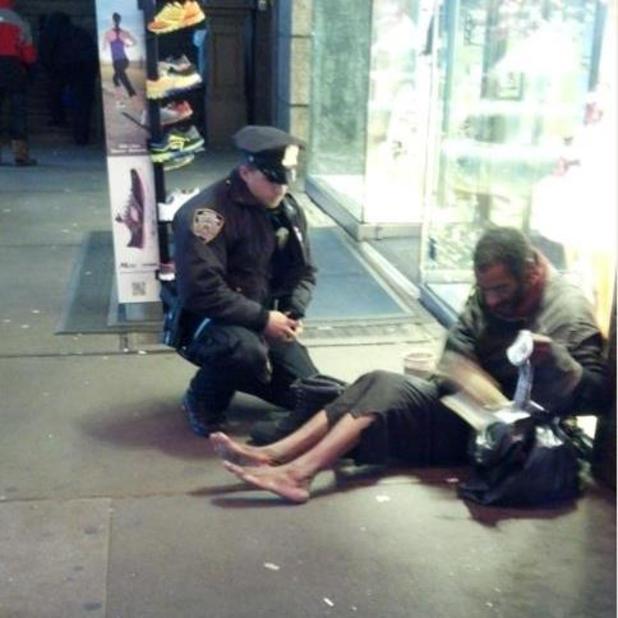
One of the reasons I suspect they often don't come sooner is because no one has "officially" complained about them yet, and believe it or not, many officers do indeed understand the lack of housing availability in communities. Remembering that police often typically default to their police "training" and enforcing the law - because that's what we pay them to do - goes a long way in figuring out when to work with them and when to assist in advocating for your clientele. It is definitely true that there are times when we simply cannot trust police with some of the "location" information, but we cannot build a working relationship established on trust and respect if we don't engage with them. At the same time, we have to realize there are times when they have discretion and times when they're mandated by their job to act. We cannot hold their actions against them, so long as they do that job with an eye toward "protecting and serving" rather than "harassing and intimidating." Therefore, we to must also exercise discretion in our interactions with them, but we must advocate for the former while speaking out against the latter.
The goal should be about working as closely as one can with all members of one's community, including the police whenever feasible, while also maintaining the confidentiality and security of those you're serving. In the end, it's always about developing relationships, raising awareness (like the Nashville Homeless Power Project did when it provided regular sensitivity trainings to the Nashville police department), and most importantly bringing multiple options via multiple providers. In today's environment of slashed budgets and dwindling resources, it is fast becoming the only way we can provide an array of resources, always with an eye towards ultimately procuring affordable, supportive (when warranted) housing to those on the streets and within the camps.
And of course this is not done indiscriminately, with gangs of roving social workers trampling through the homes of individuals who may be residing in camps or in the bushes right under our noses, then running to local police with privileged information on the whereabouts of our clients. These engagements - especially in camps - are appropriately done by invitation, and to get an invitation means first building a relationship built on trust and respect. For those outreach workers who've built that credibility within the population or a camp, it's not a "prize" to be lorded over others, bragged about in meetings, and used as proof of how good an outreach worker they are, it's a relationship one utilizes to ensure that the appropriate, competent, and helpful direct service providers in the community can benefit from right alongside those who need the services.
If the concern is that these kinds of direct service providers are hard to find in the community, welcome to the world of working with human beings. A secondary but just as important role as a champion of direct service provision to vulnerable populations is educating and raising awareness of a trauma informed, person centered approach to those who appear to be deviating from it.
Third, alienating those who care just as deeply about serving the homeless as you do by withholding information about where to find and engage people experiencing homelessness is frankly counterproductive and diverts precious scarce resources from those vulnerable individuals with the most pressing needs within our community. While the ego-creeper may think that only he/she is "sensitive" enough, "caring" enough, or "smart" enough to understand the astounding array of services and needs every individual you meet has, they would not only wrong, but dangerously insensitive, egotistical, and I would have serious reservations about their ability to perform the duties required of street outreach specialists and case managers.
Direct service providers are modeling both behavior and the power of community collaboration and responsibility to those on the streets. One of the most significant challenges vulnerable populations face is the power differential between provider and recipient of services. One of the goals of a recovery-oriented system of care is to remove the power differential by empowering those who require services while ensuring they have equal access to any and all the services they require and empowered sufficiently enough to make the appropriate decisions based on their needs. A true advocate doesn't withhold collaborative engagements and the introduction to people who might be able to assist. Instead, they accompany the individual and support them through the process, advocating on their behalf and intervening with the other provider when necessary to help clarify, and further understanding of the client's needs and background.
By acting as the sole source of their "service delivery" the ego-creep afflicted individual is not only wielding incredible power over them because he/she dictates who receives those services by forcing individuals to come to them to even find out about what services are available, they are also modeling to the person experiencing homelessness the very behavior they profess to abhor as they endeavor to obtain services for them.

If the ego-creeper truly cares about those they serve, they will realize the futility of trying to serve them all, by themselves. Not only are they keeping many from access to the services because of their ignorance, they're also well on the way to burnout, which is the number one reason direct service providers leave our field. A lose- lose proposition for the dedicated ego-creeper, for the field, and for those who need us the most.
I know the ego-creeper's heart is in the right place and their goal is to serve those who need support and assistance. I think they also realize they will never be able to meet all the need that arises in their daily engagements with folks on the street. Trusting in the relationships they've built and nurtured with the direct service providers in their area and their fellow outreach specialists will go a long way in ensuring that extremely scarce resources - and getting scarcer by the day - will be better utilized. Better utilization of those resources means more individuals served, and in the end, isn't that what everyone, including those suffering from ego creep, really want anyway?


