The face of homelessness has changed dramatically in the past year, thanks to the policies of the last ten years.
Btw, I take offense at the term "slums." It has an ugly connotation and in many "tent cities" I've been in, slums don't come to mind at all, especially when compared with some of the places I've seen in impoverished countries.....

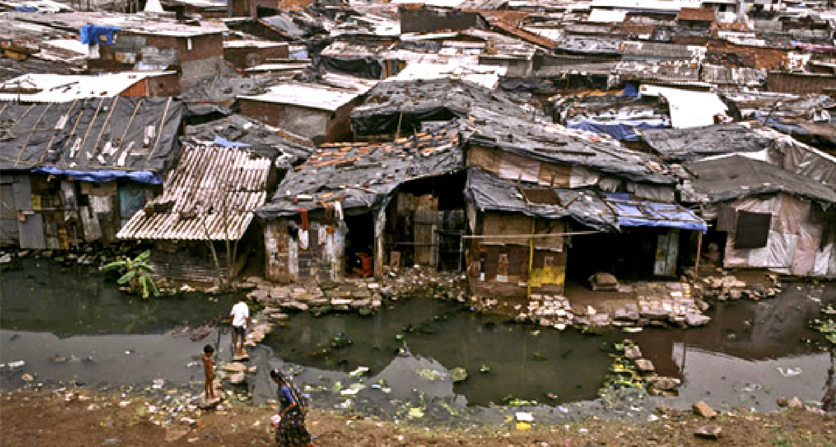
Tent Slums Spring Up in America
Concentrations of homeless people are nothing new in America, but recent BBC and Los Angeles Times reports depict a rising trend of shanty slums, such as a "city" of newly homeless people living in tents near the Ontario airport in Los Angeles.
If you recall your Steinbeck, the residents of the 20c Hoovervilles were largely tenant farmers thrown off their farms by the owners, who in turn tried mechanized farming to bring down costs and break even. These displaced farmers migrated West where they became agricultural day laborers and settled into shanty camps.
The California tent slum depicted in the BBC report is quite different, because they are not migrant workers, so much as locals who have lost their homes. It is hard to tell if the newly dispossessed are all the victims of the subprime market. More likely, the tent slum population is a mix of new and old homelessness -- perhaps with a few migrant workers in the mix.
I do not know if there is a technical point at which a tent city becomes a slum -- a boundary of some sort that gets crossed in terms of population density or length of time in existence or total acreage. But the Los Angeles Times reports that the police are handing out wrist bands to make sure that only locals take up residence in the tent camp by the airport. Non locals have to get out. Passing out armbands to make sure only locals get into the camp has to be crossing a boundary of some kind. And it is not a good one to cross.
Whatever the actual demographics, the images and the stories are heartbreaking. If ever there was a reason to let go of market orthodoxy, and to re-embrace the American spirit of making things better by the most pragmatic means possible -- this is it. Make it work better, period. No ideology; no grand theories about freedom from government; just come together to help people before we lose a generation to this mounting economic tragedy.
Crossposted from Frameshop)
*********************
Tent Cities: An American Tradition
March 19, 2009 11:58 AM
A couple weeks ago a reader shared word with the Huffington Post of a tent city in Virginia, about an hour outside of D.C., where tons of middle class people had put up stakes after getting ousted from their homes.The tip was reporter's gold and seemed entirely plausible. Foreclosures are surging, and those people have to live somewhere. But calls to five Virginia counties turned up nothing; the original tipster conceded it might just be a rumor.
The five county sheriffs all told the Huffington Post, though, that they'd heard of a tent city in Sacramento, California -- one that had been featured on Oprah Winfrey's show.
NBC Nightly News followed up with a "sign of the times" piece on the Sacramento shantytown. Apparently recently-employed people were shown cooking soup in coffee cans and living out of tents along the American River. The report said tent cities were also popping up in Seattle, Reno, and Nashville. Several other news organizations jumped on the story, all linking the tent city phenomenon to the recession. A UK Times Online headline declared that "America faces new Depression misery as financial crisis worsens."
What those reports didn't say is that Sacramento's tent city has been a part of the landscape for years -- at least five, according to a spokesman with the Sacramento mayor's office. Those people weren't all washed onto the banks of the American by a recent wave of foreclosures.
On Friday, the Huffington Post asked readers to let us know if there were tent cities in their own areas.
Readers responded with tips on over a dozen improvised communities across the country, from Olympia, Washington, to Camden, New Jersey. Our follow-up reporting showed, however, that the camps tend to predate the current foreclosure crisis.
There's nothing new about tent cities in the United States. There's nothing new about poverty in America. Some folks will be living in improvised shelters in public space whether we're in a recession or not. And with food stamps, unemployment benefits, and pension funds -- things unavailable at the onset of the Great Depression -- there's a safety net that can catch the unemployed and foreclosed, giving them time to get back on their feet before they're living under the stars. Moreover, a widespread consumer item that wasn't available to our great-grandparents' generation -- the RV -- assures that we'll see waves of people living out of their massive vehicles before communities of middle-class families start sleeping in Wal-Mart tents.
"It's a little early for us to get victims of the economy," says Dick Lawrence, pastor of the St. Vincent de Paul church in Baltimore. For now, "people double up, take each other in."
Lawrence is intimately familiar with the type of people who wind up in a tent city. His church has been by Baltimore's inner harbor since 1840. As the surrounding neighborhood has revitalized in recent years, the church has stayed the same, and so has its adjacent "Bum Park."
"We've had this park beside the church 50 years and it's always had homeless guys during the day," says Lawrence. When Lawrence arrived at the church in 1973, he says, the bums were already here. Maintaining a stable community in the park next to the church is a matter of "staying on the knife edge between compassion and enabling."
When the city put the park up for sale in the 1990s, the church bought it to prevent unwanted development, says Lawrence. After the property changed hands, the police department lost its prerogative to clear people off the benches at night. Lawrence says he had no problem with letting people sleep in the park. He's not going to shoo them away, and he figures their presence in downtown Baltimore, just a stone's throw from city hall, gives good visibility to the problem of homelessness.
To discourage prostitution and drug-dealing, the church banned actual tents years ago. So denizens of Bum Park (what residents themselves call it) claim a bench, put their stuff under it, drape a tarp across the top, and call it home.
On Saturday, the Huffington Post visited Father Lawrence and Bum Park to investigate a reader's tip. Fifteen or so men and women were lying down or sitting on benches during a cold drizzle. About half the park's residents rested prone beneath their tarps, making the barren park seem like an alien landscape filled with bright-blue cocoons.


